
22 Jan 2022
The nation is split into equal thirds politically. The lines between these are
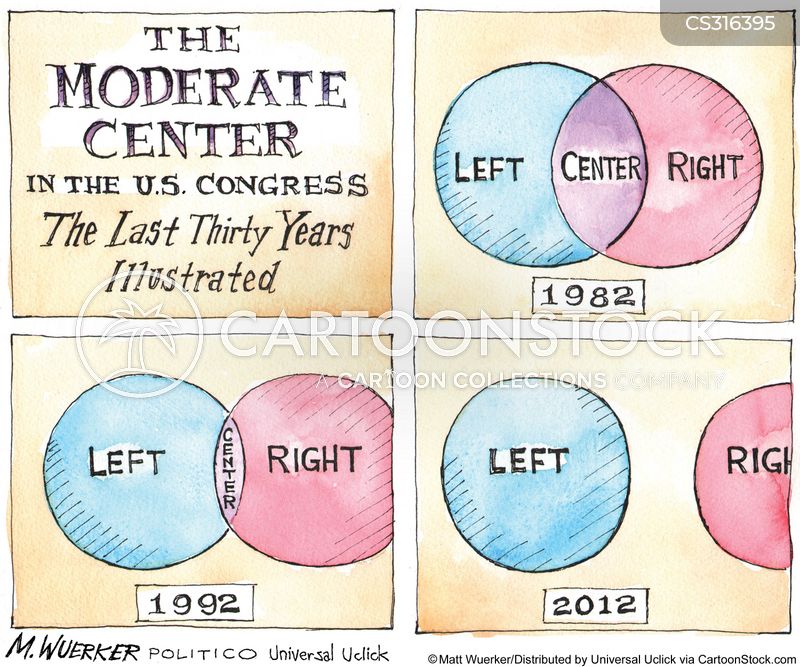
grey but fairly distinct.
Right:
The group on the right of the American political spectrum is about one third of the electorate. They tend to be more religious, usually protestant (non-denominational). The validity, consistency, and application of this religiosity can be debated. To be fair, these things can be debated about any one individual’s belief system, including atheists who claim to have none. (As I have said many times: The problem with Christianity is it follows a book. This makes it much easier to demonstrate contradictions than an atheist who can make up what they believe on the fly) The right tends to authoritarianism, not necessarily political, but they would be more likely to support ‘a leader’. They tend to be more rural. They tend to have fewer degrees—notice I do not say less educated since degrees are about doing school and education is about understanding. As a group the right consists of predominately white Americans.
As America becomes more and more liberal the right has increasingly believed their way of life and beliefs are being attacked and destroyed. Add to this idea the Conservative Christian rhetoric of martyrdom that, in my experience, has been around for forty years. This is, by the way, in North America, complete nonsense but I will save my diatribe on martyrdom v. asshole for another time.
They, the right, have convinced themselves that they are victims. This desire to be a victim began in the 1950’s and 60’s (one of the unintended consequences of the 50/60s protect movements) and really sprung to life in the 70’s and 80’s with the ‘me generation’. (Can we say cynicism became cultural identity?) Of course, this was not just the right that was in the me generation. The difference was the effect of affirmative action on the right. Affirmative action is the number one cause of the right’s belief they are being attacked and destroyed. Since the objects of affirmative action have increased, adding Women and Gays and others, this idea of attack has only gotten worse. Trump represented the zenith of the right’s victimhood and encouraged the destruction of American ways of governance that had lasted for the last two hundred plus years in the name of victimhood.
This combination of me generation and victim status has become deadly.
Center:
The middle third is too busy to worry about any of it. Since the 70’s and the beginnings of easy credit, the middle has been trying to finance the American dream out of their own pocket rather than as a benefit of a great society. Some of this is done with debt: In 2020 the average American has $6,000 in credit card debt—remember, this is just credit cards not cars, student loans, or other bank debt like lines of credit. Considering all debt, which includes mortgages, the number is $90,000. This is not as bad as I thought. To compare, the average American savings is around $5,000—for whites. Keep in mind that the private debt total is higher than the national debt total but we only hear about the national debt. Most people, left, right, and center, are living from paycheck to paycheck. Whites are doing much better than blacks and other minorities since they make more money and have more savings.
There is always a criticism of the center by both left and right that they do not care. This is far from the truth. The center cares but are too busy to do anything about it. Living from paycheck to paycheck, going to work, dealing with kids, they are too busy existing and getting by to worry about politics and the issues politics are enamored with.
Some of this is a result of the aforementioned cynicism of the me generation. Some is the numbness that comes from too much information. Some is a set of priorities about pleasure and the American dream that has no room for long-term thinking. I will discuss this cynicism in more detail below since it applies to the entire spectrum.
They are just getting on with life.
Left:
This third of the political spectrum has not changed a lot since the 60’s in the sense that they cannot get along within themselves. The most obvious example at the moment is Joe Manchin who is almost singlehandedly destroying the first term of the Democratic President Joe Biden by blocking legislation that would help all the American people, not just the rich. Legislation that is overwhelmingly popular among his own constituents but not his political donors. This inability to work together over the long haul demonstrated itself in the 50’s civil rights movement and has been the consistent downfall of the democratic party since 1965. Factionalism misses the big picture and the left succumbs to it consistently. One can argue this is the essence of democracy but in today’s politics of extremes and overabundant media it is not helping.
The left also has the problem of being over-educated. Unlike my comments above I mean here too many degrees. There is an intellectual snobbery that pervades the left. An assumption that people without degrees cannot be intelligent or know anything or make the right decisions. I have met many very well schooled people who know nothing outside their very narrow domain and have met many PHD holders who cannot even do the basic things that their degree requires (PHDs in music who cannot conduct in three for example). This is also an easy label to pin by the right. Very popular with Richard Nixon in fact and used now by Ted Cruz—a Princeton and Yale graduate–and others completely disingenuously. Academics are not reality; degrees are not intelligence and certainly are not indicative of always making the right decisions.
The biggest problem with the left is it inability to personalize an emotional narration of the issues that people can grasp and run with. People want a TV experience, an emotional experience, not fact and logic. This comes partly from the focus on “fact” and partly from a lack of empathy or understanding of the right and the common man. This lack leads to ideas like, ‘switch to renewable resources now’. It is true this must be done but the issue is very complicated and would lead to large social and economic disruption—ignoring this is perilous. Another is ‘defund the police’ which mostly is about redistribution of training and not elimination but the left lack of understanding of the common man’s relationship with the law and perceptions of crime lead to confusion and accusation against the left.
Thoughts:
The political divide has been growing ever since Newt Gingrich stated the difference in the political spectrum was a moral one. It became extreme when Obama got elected. Everything at that point became ridiculously uncooperative. To the point where the left voted against anything the right proposed because it was from the right. The right did exactly the same thing (they added to this negativity anything proposed by a person of color). Trump made it soar to the heights of the dangerous. He confirmed the victim status of whites in America—the last bastion of victimhood. He used the bully pulpit to promote this and the right jumped in with this affirmation to the point of violence and the systematic destruction of the voting system in America (the government today tries to function as a parliamentary democracy which is contrary to its fundamental design). The revolutionary rhetoric became reality with the 6 January 2021 attempt to overthrow the election to keep Trump in office.
There is a logic to much of what the right complains of. The left seems to control speech (“being PC”) more than the right. E.g., one cannot criticize cultural traits without being accused of racism by the left. Criticism can be racist but not necessarily so. There are taboo words and taboo subjects in all segments of the population. But logic is about asking questions and reasoning answers, this, the right, has stopped doing. Or they have stopped allowing all the questions needed to get to complete answers. If one stops asking questions at the right spot, e.g., ‘the election is filled with fraud’, if one does not ask how this would actually work on a large enough scale to affect the outcome of a presidential election one need not doubt the idea. Any single case of fraud proves your point—if you stop asking how. If one believes, as trump/republicans/public Christians do, that trump is out to stop the world conspiracy of the left pedophilia rings without asking why he praised people like Jeffrey Epstein then no problems occur; if one does not ask how the people that they have known forever in their lives, who happen to be democrats, are actually secret pedophiles then there is not problem with the belief.
Moral absolutism has changed from right to left. The right uses the words of moral absolutism but not the actions of such. E.g., they would be against pornography but studies indicate conservative areas of the country watch more porn than other parts of the country. Although one study indicates this is a religious thing and not a conservative political thing. (“Unbuckling the Bible Belt: A State-Level Analysis of Religious Factors and Google Searches for Porn” ) They believe that killing is wrong (a least unborn baby killing) but have no problem with driving cars into protestors, do not want any gun control, are pro death penalty.
Why the left fails: the biggest problem with the left is it inability to personalize an emotional narration of the issues that people can grasp and run with. The right has mastered this, though often their message is so off any truth these days as to be shocking. Also the association of martyrdom and the stories they tell are often ridiculous. But, as I said, if one stops asking questions at the right spot, there is no problem with the right’s narrations.
American political cynicism should be understandable. Think back to the 50’s and 60’s protest movements. It seemed that many things were accomplished. Blacks became more equal—notice, ‘more’—and women were allowed more independence of men (their husbands). But the end of the era was Richard Nixon and the demonstration of government out for itself. Following Nixon and congress’s attempt for forestall a repeat of this came election finance reform that led to politics being completely driven by money and power and not good governance. Another consequence of Nixon was the lack of media, and by extension public, idealism regarding politicians. There were, and are, no boundaries anymore. (Gary Hart was classic) No idealism leads to cynicism against politicians, politics, and government. The right takes this and tries to force their control, the left takes this and talks of ideals without being able to bring the majority along, and the center gives up and tries to go about their lives.
And then there is social media, though I prefer to think of screens. The problem that began with the invention of television has gotten worse. Screens allow, almost inevitably, the avoidance of self inspection. As Pascal put it:
“The only thing that consoles us for our miseries is diversion, and yet this is the greatest of our miseries. For it is mainly what prevents us from thinking about ourselves, leading us imperceptibly to our ruin. Without it we would be bored, and this boredom would drive us to seek a more solid means of escape. But diversion amuses us and guides us imperceptibly to death’. “
– Blaise Pascal, Pensées (Indianapolis: Hackett, 2005), 6.
The issue, isolation leads to the lack of ability to deal or empathize with each other. It used to be that you knew your community even if only by speaking to your neighbors across the fence. When conversations, face to face, happen there is a leeway given to the other person. We do not have to agree with all they say, we do not have to talk about all the subjects possible, but we do tend to find and steer around the subjects that cause angst. This is beneficial to us, them, and more importantly, society as a whole. When our neighbor has a different opinion than we do we tend to consider our own. We modify, change, clarify our reasoning–we adjust—this is the essence, core, fundamental necessity of American democracy. Screens prevent this in several ways: One, we are isolated in our own homes, two, we are only seeing what we want to see and agree with on our screens, three, social media algorithms give us more of only what we choose to see which leads to rabbit holes. These holes get deeper and deeper in such a slow, steady, way as to be unnoticeable. This rabbit hole effect makes the watcher feel they are making their own decisions and this engrains it solidly in the thoughts of the watcher. Advertisers use this technique in their ads, they encourage a truncated logic to conclude that their product is the best. Since people like to think they make good decisions this becomes tightly engrained.
Solutions:
How then does one dislodge faulty thinking? Keep in mind that “faulty thinking” is typically attributed to those who have no other crime than to disagree with us.
Most educated people say education is the answer. Is it? We live in a society that is all educated. We all go to school, almost all graduate from high school (88% is the national average, though that is ranked 22nd of the 27 industrial countries), 41% of people aged 18 – 24 attend college and 24% of those graduate.
The concept of grade inflation was discussed a lot in the 80’s along with “Johnny left behind”. These concepts come from the idea that our society pushes to advance people who should be held back. This push is another consequence of the 60’s where the ‘psyche’ of the student meant more than their learning or knowledge. More people go to universities than before partly due to the need to distinguish oneself somehow for jobs. Schools are judged on graduation rates and college admittance. But now there are masters degree recipients making coffee at Starbucks. Employers find it easier to look over applicants and eliminate those without degrees even if the person may have experience. Education has become, for many reasons, about passing tests and not about knowledge. I mean here, useful knowledge. A quote:
“‘Cram them full of non-combustible data, chock them so damned full of ‘facts’ they feel stuffed, but absolutely ‘brilliant’ with information. Then they’ll feel they’re thinking, they’ll get a sense of motion without moving. And they’ll be happy, because facts of that sort don’t change. Don’t give them any slippery stuff like philosophy or sociology to tie things up with. That way lies melancholy.’”
–Fahrenheit 451, Ray Bradbury
So how does this education method need to change? There is little time for individual students, there are too many needs in a large classroom, there are too few teachers to individualize learning. Can we change learning to a questioning format rather than an answering format? ‘Why’ and ‘How’ should be the predominant words in every subject but is there time? I think at first the going would be slow but the habit of this will speed the learning process over time. It would teach students to question. It would show that questioning is good. Could an occupation that has a methodology that is conservative like education deal with questions that would undoubtably stretch to touchy taboo subjects? How could the system test this? Testing is the easier way to decide a system is working, parents and politicians like this. School administrators like this also. That is one reason education went that way.
There are a few ideas that need to change to accomplish education by question. We need to fund education as a priority; there is an anti-intellectualism in America today, I think since the 60’s when the right was able to brand the left at intellectual, Eastern elites, so that education/school is not respected by large segments of the population; The misconception, by many, ‘I went to school, teaching cannot be hard’.
The other issue with education as it is now is summed up in this quote:
“We’ve bought into the idea that education is about training and “success”, defined monetarily, rather than learning to think critically and to challenge. We should not forget that the true purpose of education is to make minds, not careers. A culture that does not grasp the vital interplay between morality and power, which mistakes management techniques for wisdom, which fails to understand that the measure of a civilization is its compassion, not its speed or ability to consume, condemns itself to death.”
― Chris Hedges, Empire of Illusion: The End of Literacy and the Triumph of Spectacle
How do we dislodge screens is the larger question since they have become pervasive, at the dentist office, in the elevator, every phone is a screen now, TV, cars have screens that entertain or distract though we often say they inform. We even give them to our babies so we do not have to interact with them (‘knock it off kid, you bother me’) I have often seen parents give their kids screens for the purpose of looking at their own. As long as Pascal is correct there is no stopping this. New technologies with communication potential have all begun with the manufacturers saying this will be great for society, allow greater communication, add to the educational experience and they all have gone down the distraction path. Radio now is mostly used primarily for right wing talking and music; TV is used for entertainment with a small minority of underfunded public service and documentary programs; the internet providers and Facebook praise themselves for starting protests in Egypt but seem silent on admitting they facilitated the January 6th, 2021, attempt to take over the US government election process and give the win to the man that lost by eleven million votes. Cell phones were this amazing communication boon and now we must be working 24/7 to answer them.
Food for thought?


I’m happy to see you’re still writing. You were always really good at it.
LikeLiked by 1 person